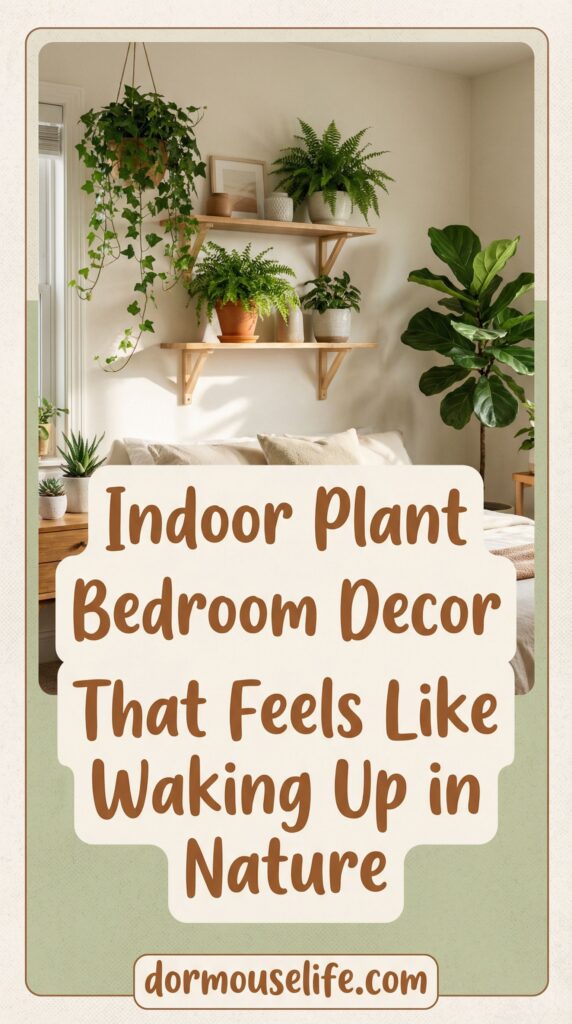
Indoor Plant Bedroom Decor That Feels Like Waking Up in Nature
There’s something instantly calming about walking into a bedroom filled with greenery. The soft leaves, gentle textures, and natural color instantly make the space feel more restful and lived-in.
This post may contain affiliate links, which means I’ll receive a commission if you purchase through my link, at no extra cost to you. Please read full disclosure here.
Indoor plants can do more than just look pretty. When styled thoughtfully, they can soften harsh lines, improve the feeling of air quality, and turn even a basic bedroom into a personal sanctuary.
If you’ve been wanting to add plants to your bedroom but aren’t sure where to start, this guide will walk you through exactly what to choose, how to style them, and how to keep them thriving.
Choose the Right Bedroom-Friendly Plants
Not every plant is happy in bedroom conditions, especially if the space is small or gets limited light. Start by choosing varieties that tolerate lower light and are forgiving if you miss a watering.
Great bedroom plant options include:
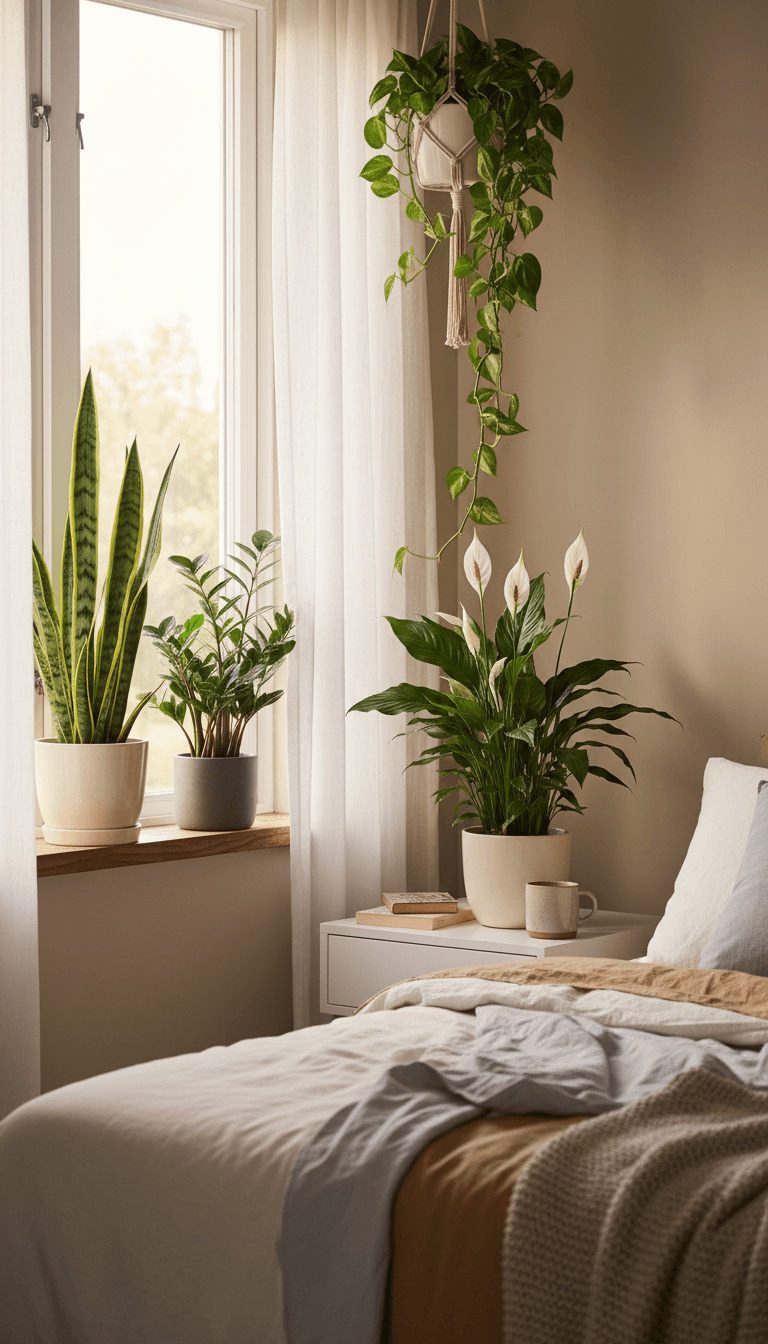
- Snake plant (Sansevieria) – low maintenance, architectural leaves
- ZZ plant – thrives on neglect and low light
- Pothos – trailing vine that works on shelves and curtain rods
- Peace lily – loves medium light and adds soft, lush foliage
- Philodendron – easy-care climber for cozy, organic shapes
- Spider plant – playful, airy leaves and easy to propagate
Think about your bedroom’s natural light when you choose. North-facing rooms generally need low-light lovers, while east- or west-facing windows can handle medium-light plants.
Action tip: Stand in your bedroom at midday and note how bright it feels; pick plants specifically labeled for that light level so they’re more likely to thrive.
Style Plants to Enhance Your Bedroom Layout
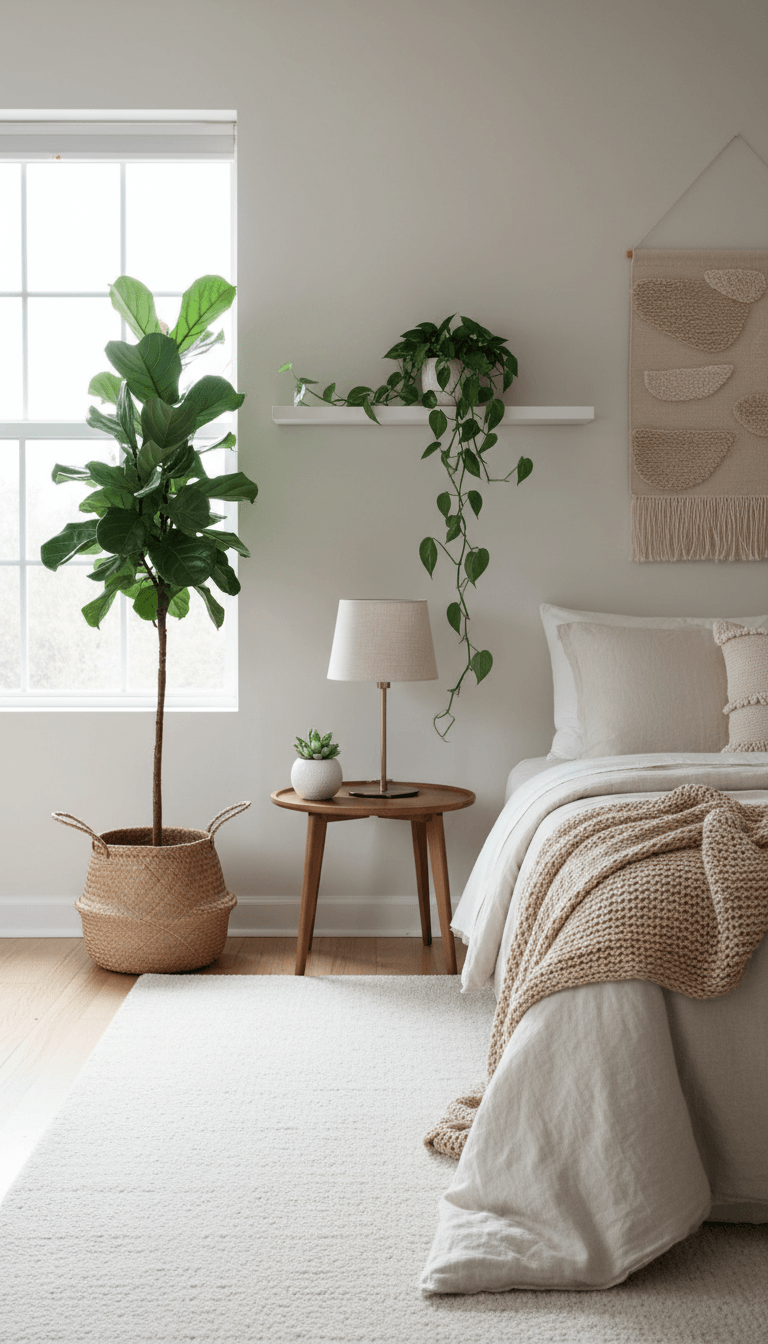
Once you’ve chosen plants, the magic is in how you style them. Think of your plants as part of the overall decor, not an afterthought.
Try these placement ideas:
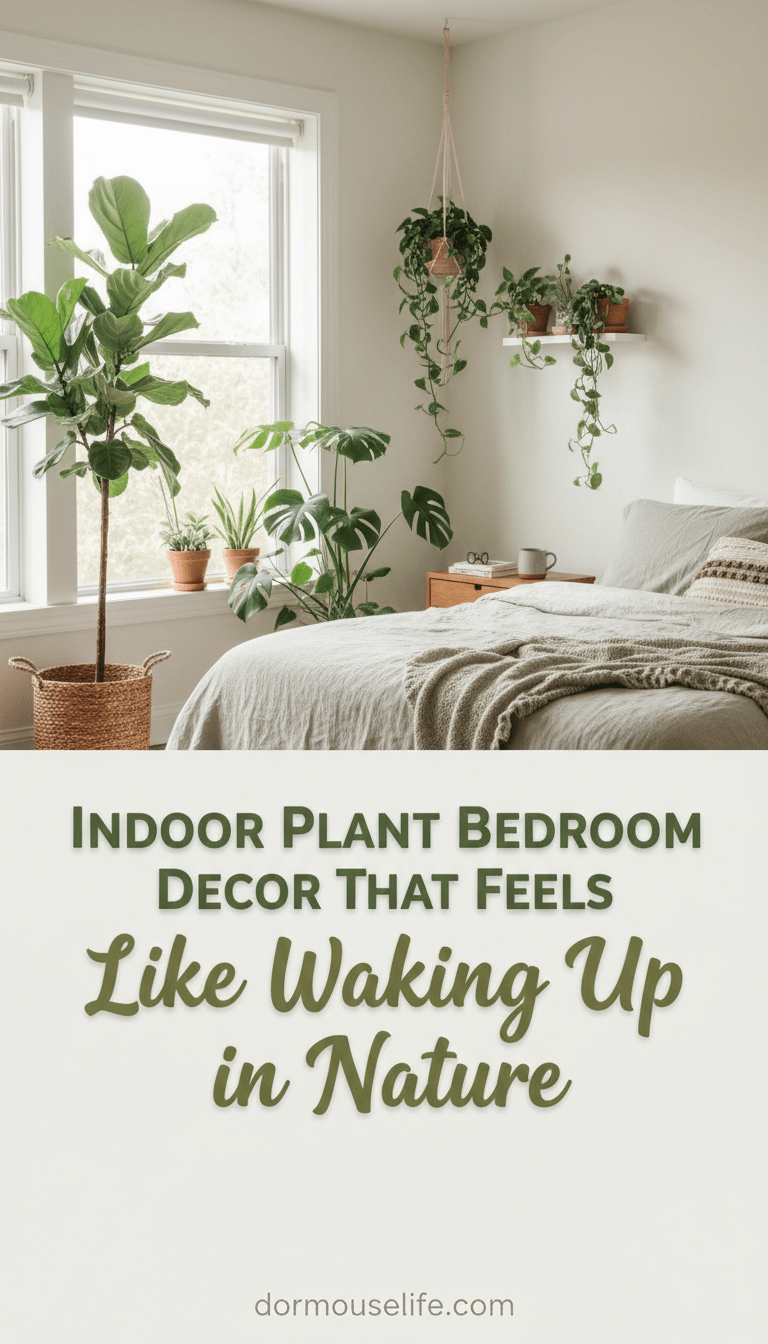
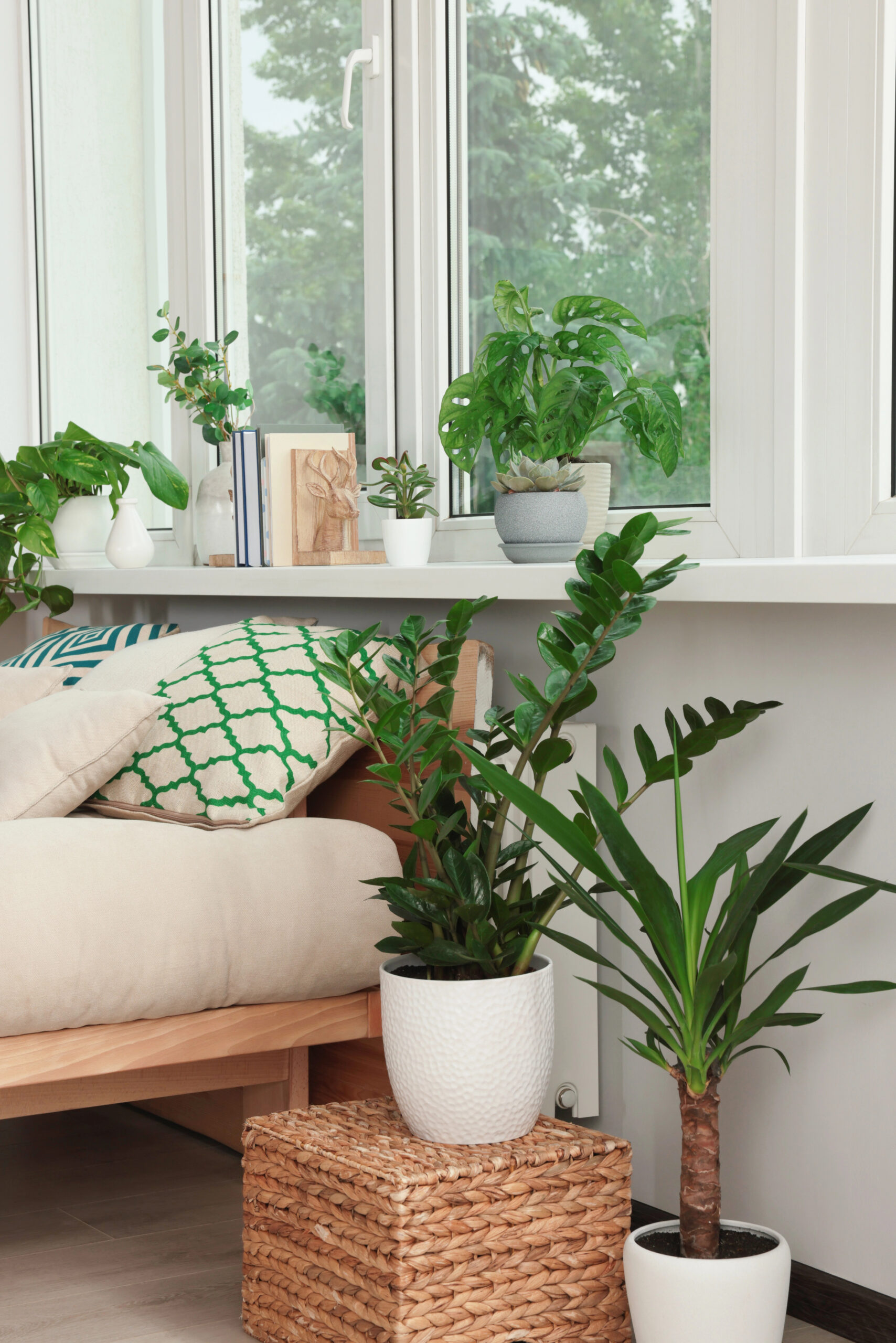
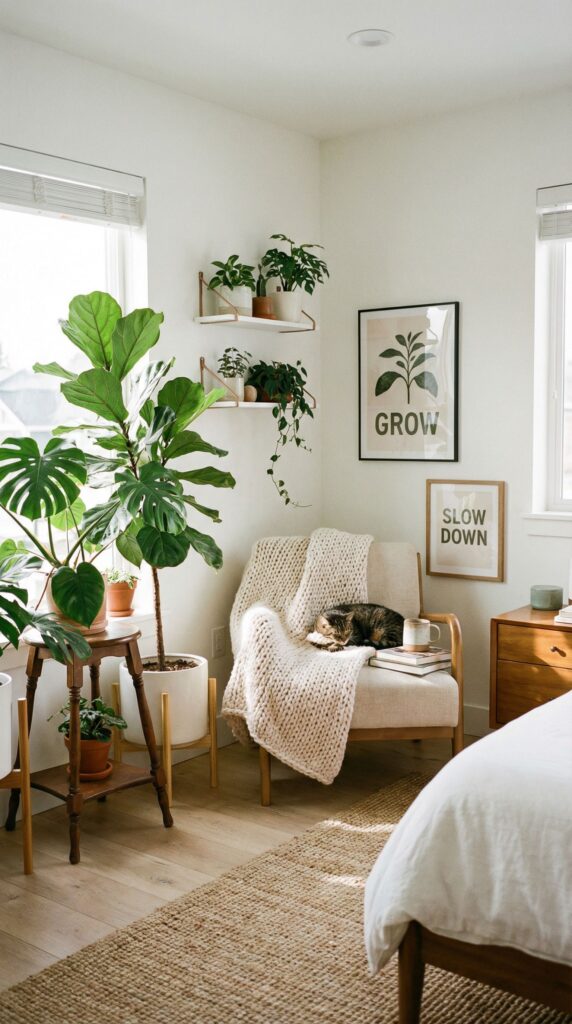
- Place a tall floor plant (like a snake plant or rubber plant) in an empty corner
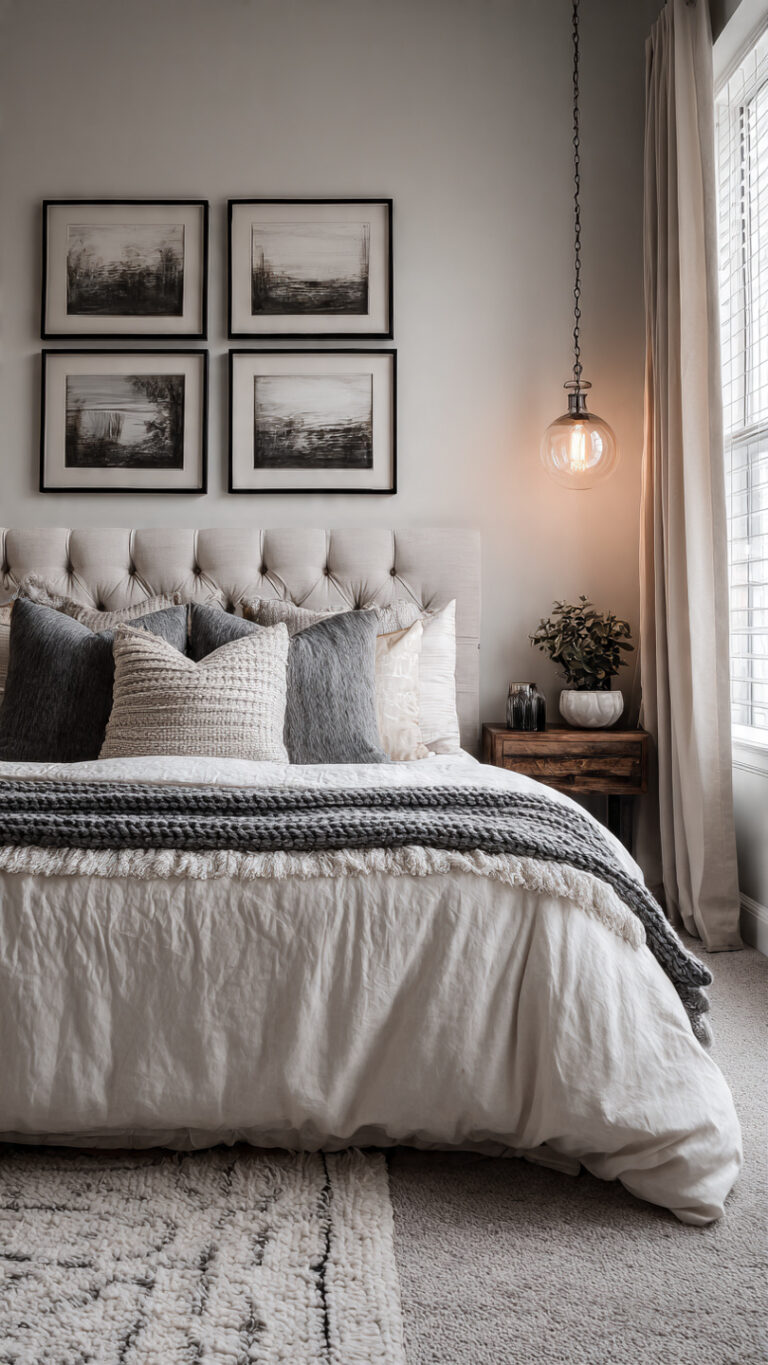
- Add a small plant to your nightstand to soften lamps and alarm clocks
- Use a trailing plant on a dresser or shelf to create movement
- Hang a plant near a window to draw the eye upward
- Cluster three plants of different heights to create a focal point
Use planters that complement your bedroom style: woven baskets for boho, matte ceramic for modern, or simple terracotta for a natural, minimal look. Repeating similar pot colors or materials helps the room feel cohesive rather than cluttered.
Action tip: Choose one main “plant moment” in your bedroom—a corner, dresser, or windowsill—and build a small grouping there before spreading plants throughout the room.
Balance Calm Decor With Plant Colors and Textures
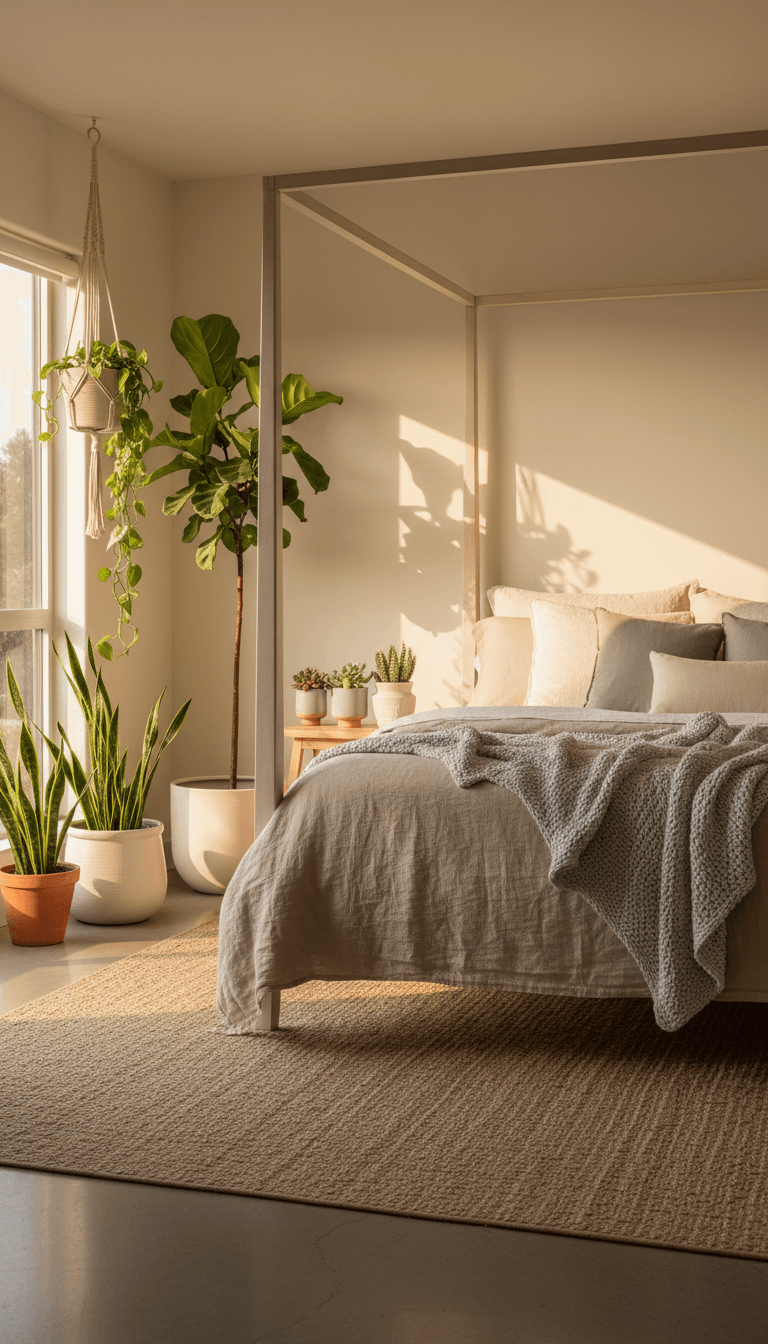
Plants bring living color into your bedroom, but too much visual noise can make the room feel busy instead of restful. Aim for a balance of lushness and simplicity.
Use these design guidelines:
- Stick to mainly green foliage with one or two accent varieties (variegated or patterned leaves)
- Mix leaf shapes: one tall and spiky, one trailing, and one soft or rounded
- Repeat the same plant type in a few spots to create visual harmony
- Keep pot colors to a limited palette (for example: white, beige, and wood)
If your bedroom has a strong color scheme—like deep blues or warm neutrals—choose plants and pots that support that mood. Deep green leaves look beautiful with dark, moody walls, while lighter, airy plants pair well with soft, minimal rooms.
Action tip: Before buying more plants, pull all your existing plants into the bedroom and rearrange them; see what mix of sizes, shapes, and colors feels most calming, then fill in any gaps intentionally.
Make Plant Care Fit Your Real Life
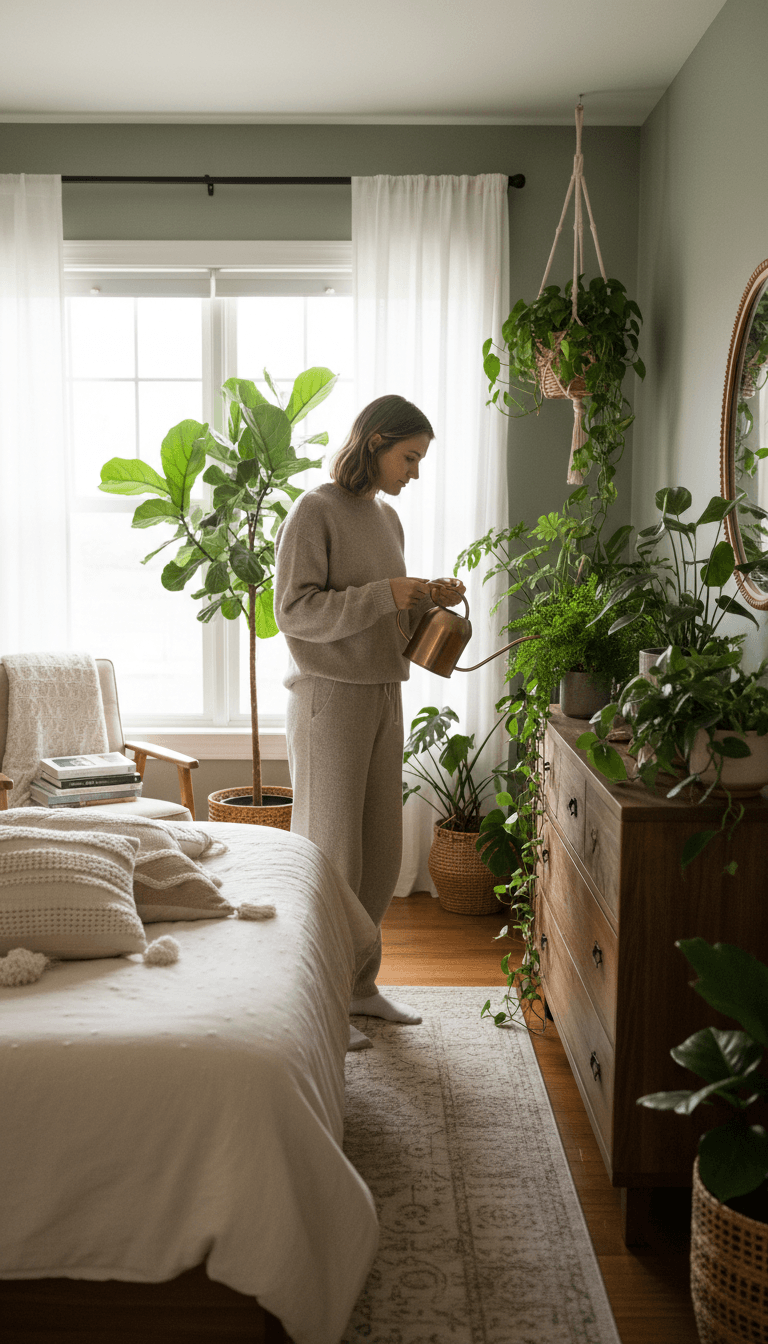
A plant-filled bedroom only feels relaxing if the plants are actually healthy. The key is choosing a care routine that fits your lifestyle, not the other way around.
Keep care simple:
- Group plants with similar light and water needs together
- Use saucers or baskets to protect furniture and floors from drips
- Set a repeating weekly reminder to check soil moisture
- Rotate plants every few weeks so they grow evenly toward the light
- Dust leaves gently with a damp cloth to keep them looking fresh
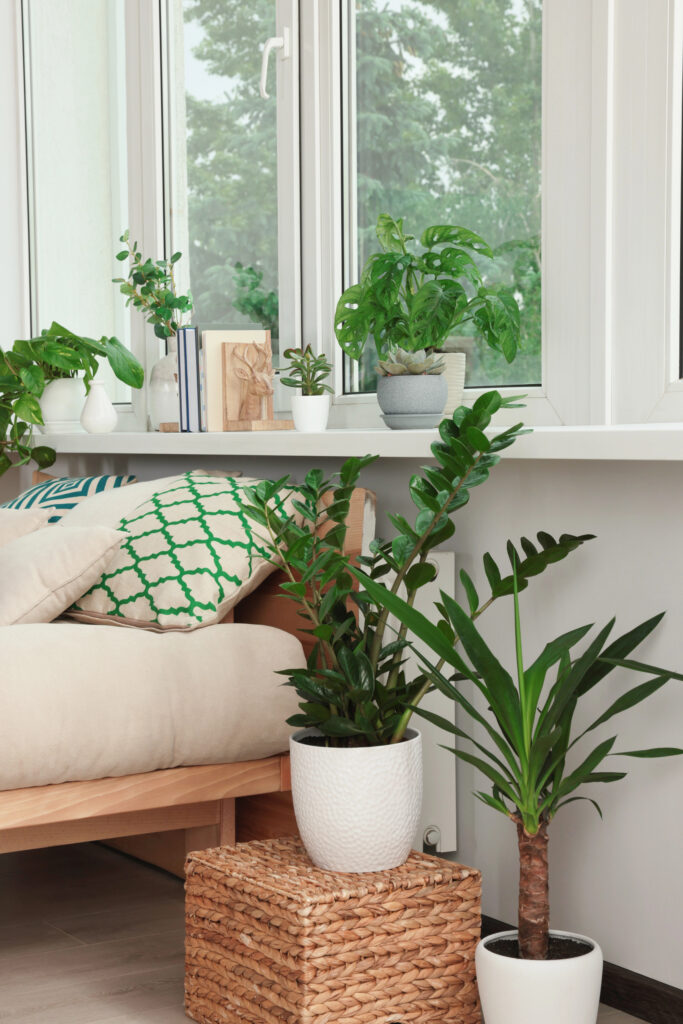
If you travel often or tend to forget watering, lean heavily on low-maintenance options like snake plants, ZZ plants, and pothos. Healthy, thriving plants will always look better than rare, high-maintenance varieties that struggle.
Action tip: Pick one day of the week as your “plant check-in day” and tie it to an existing habit—like changing your sheets—so it becomes part of your regular bedroom reset.
Use Plants to Support Rest and Nighttime Rituals
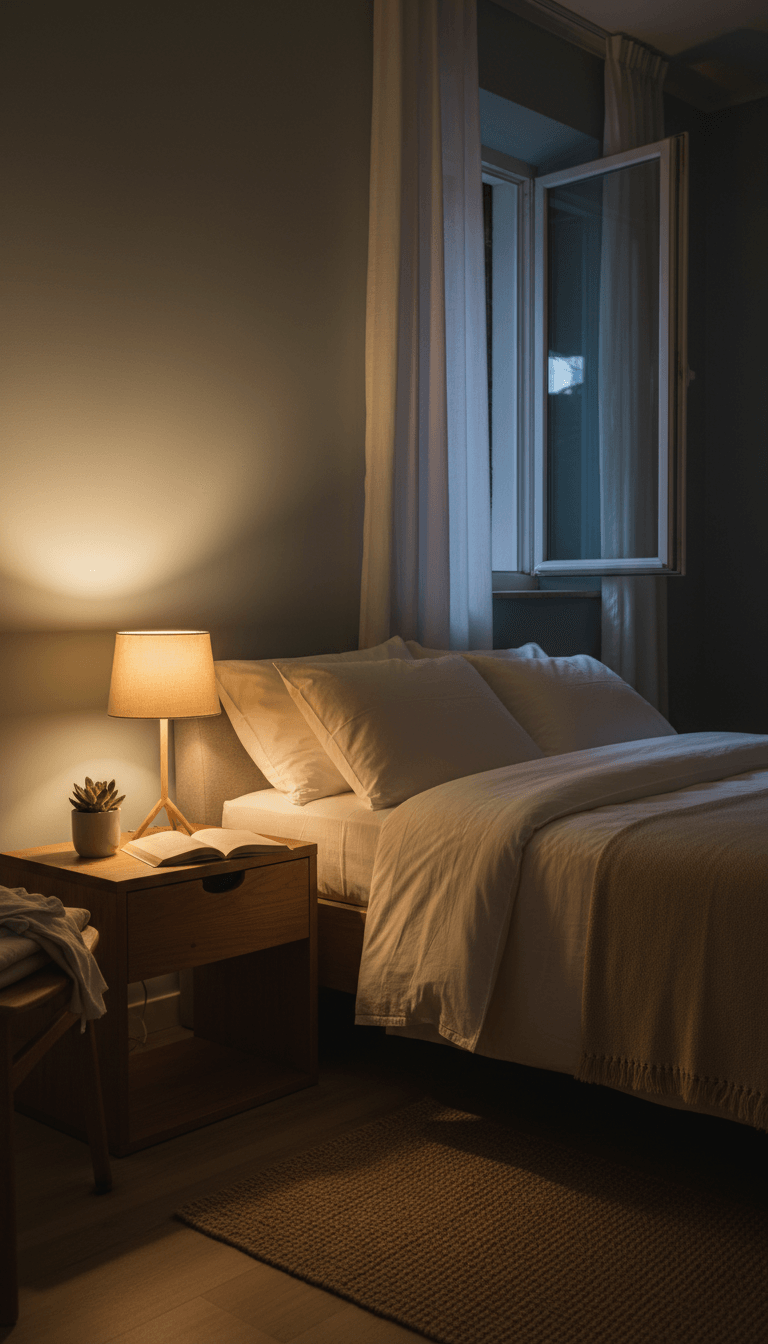
Plants can become part of your wind-down routine and help signal to your brain that it’s time to rest. The goal isn’t to turn your bedroom into a jungle, but to create a soft, nurturing atmosphere.
Consider these nighttime-friendly ideas:
- Place one calming plant, like a peace lily or fern, where you can see it from bed
- Use a small plant instead of extra decor on your nightstand to reduce visual clutter
- Pair plants with soft, warm lighting and natural materials (wood, linen, rattan)
- Keep the area around your bed simple and uncluttered so the plants stand out
Over time, just seeing your plants as you dim the lights and get into bed can become part of a relaxing ritual. That repeat visual cue of nature helps your bedroom feel like a retreat from the rest of your home.
Action tip: Do a quick five-minute reset before bed—clear your nightstand, straighten your bedding, and adjust or water one plant—so your bedroom feels fresh and intentional when you turn out the lights.
Conclusion
Indoor plants can completely change the feeling of your bedroom, turning it from a purely functional space into a soft, grounded retreat. By choosing the right varieties, styling them intentionally, and keeping a simple care routine, you can enjoy all the visual calm of a plant-filled space without adding stress.
Start with just a few well-placed plants, see how the room feels, and build from there. Over time, your bedroom will become a space that not only looks beautiful, but genuinely supports rest, relaxation, and the daily rituals that make you feel at home.