How to Organize Your Food in Your Pantry for Quick and Easy Access
Getting your pantry organized doesn’t have to feel overwhelming. It’s about finding a simple system that works for you and makes it easy to find what you need when you cook or snack. The best way to organize your food is by grouping items into zones based on how you use them, like snacks, baking supplies, and canned goods.
This post may contain affiliate links, which means I’ll receive a commission if you purchase through my link, at no extra cost to you. Please read full disclosure here.
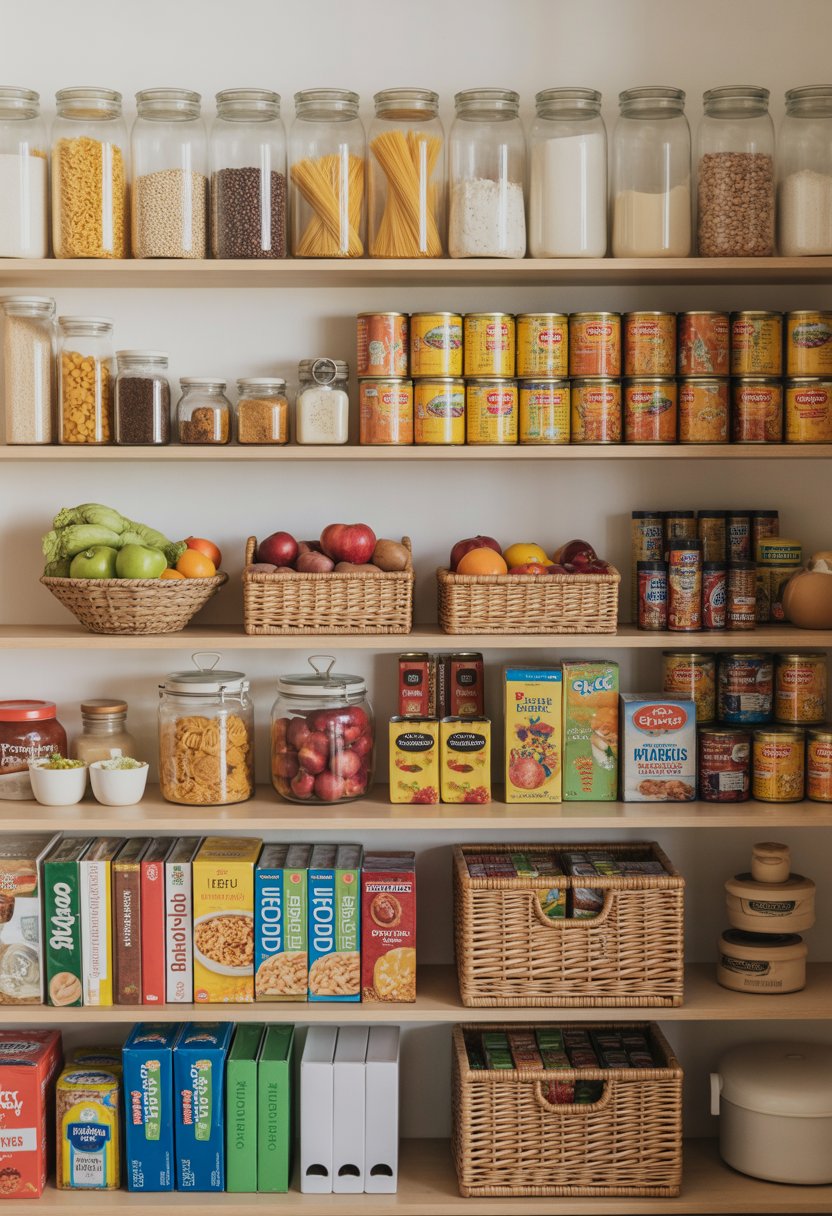


When you keep similar items together, it saves time and keeps your space tidy. Using containers or baskets to hold smaller things can help prevent clutter and make everything easier to access. You’ll spend less time digging around and more time enjoying your meals.
Plus, organizing your pantry means less food waste because you’ll see what you have and avoid buying duplicates. Whether your space is big or small, a few smart steps can make a big difference in how your pantry feels and works every day.
Step-by-Step: How to Organize Your Pantry
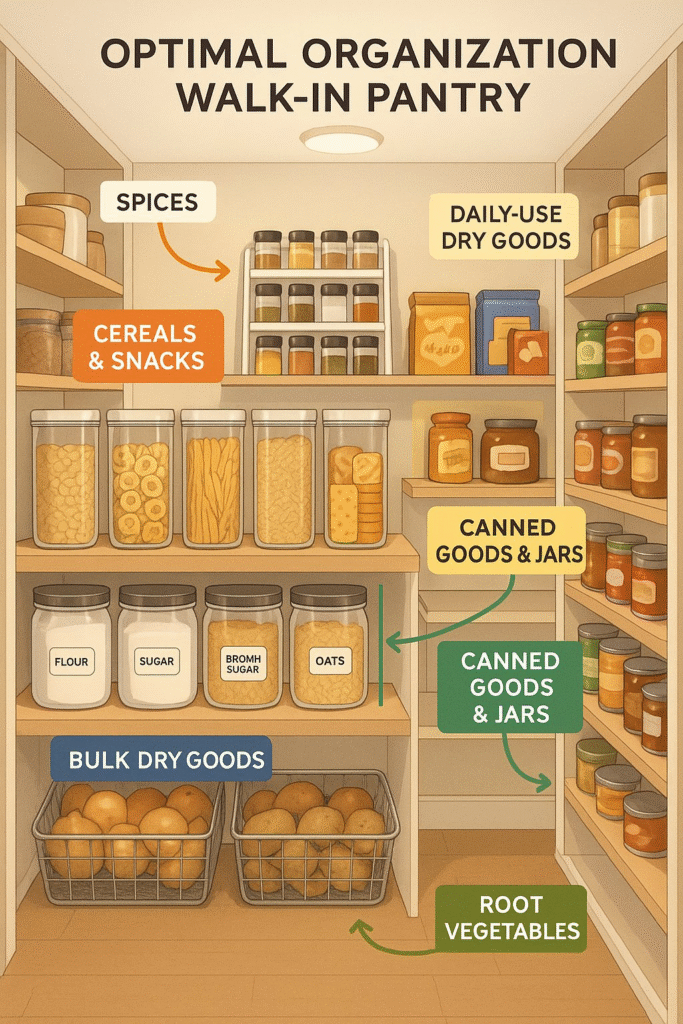
Organizing your pantry takes a few clear steps: start by clearing and cleaning everything, then check what you have, sort your food, and finally arrange it by zones. This approach makes your pantry easier to use and keeps it tidy longer.
Clear Out and Clean Everything
First, take everything off your pantry shelves. Put expired or stale food in the trash right away. This helps you see exactly what’s left and what space you have.
Next, clean your pantry shelves well. Use soap and water or an all-purpose cleaner to wipe down surfaces. Don’t forget corners and shelf edges where crumbs can build up.
Let your pantry dry completely before putting anything back. A clean pantry helps prevent pests and keeps your food fresher.
Take Pantry Inventory
Once your pantry is empty and clean, it’s time to take an inventory. Write down what you have, including dry goods, baking ingredients, canned items, and snacks.
Check expiration dates during this step. Toss out anything past its best-by date or that looks off.
Knowing what you already own avoids buying duplicates later and helps you shop smarter.
Sort and Categorize Your Food
Now group your food by type. For example, put baking ingredients like flour, sugar, and baking soda together.
Create categories such as:
- Dry goods (rice, pasta, grains)
- Canned foods
- Snacks and chips
- Spices and herbs
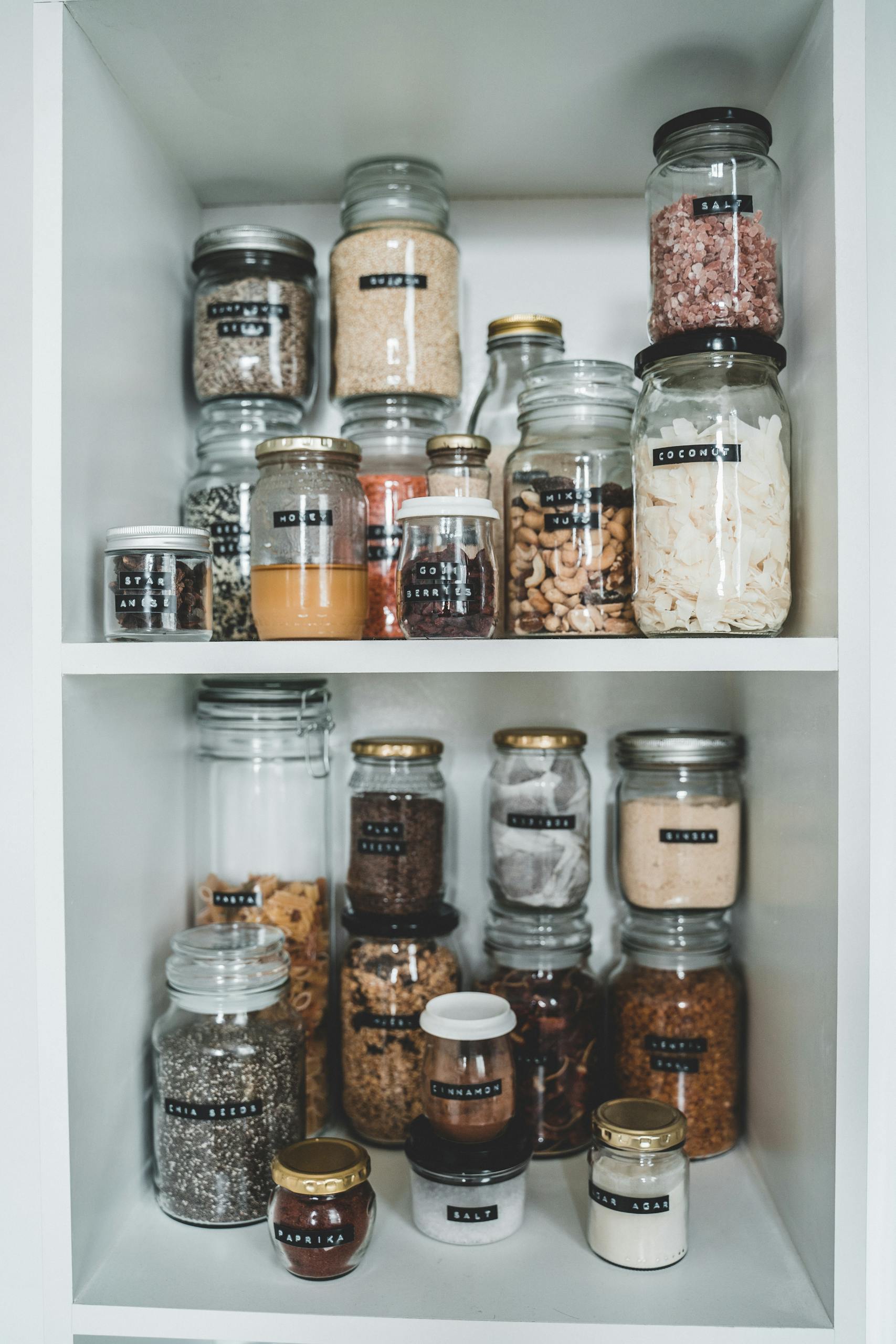
Use clear containers or labeled bins to keep things neat. This makes it faster to find what you need and keeps your pantry tidy.
Arrange Food Zones and Pantry Categories
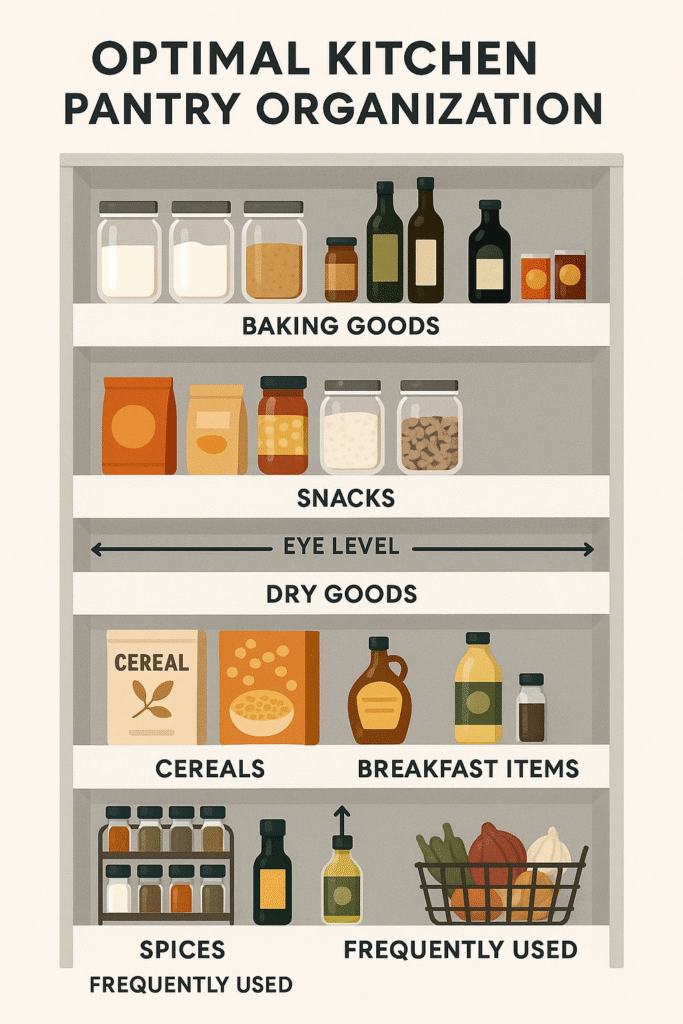
Set up your pantry so you use zones for different types of food. For example, place baking ingredients on one shelf and snacks on another.
Keep frequently used items at eye level or within easy reach. Store heavier items like large bags of flour or rice on lower shelves.
Consider using baskets or stackable containers to save space and keep categories separate. This kind of pantry organization helps you save time when cooking or shopping.
Pantry Storage Solutions and Organization Systems
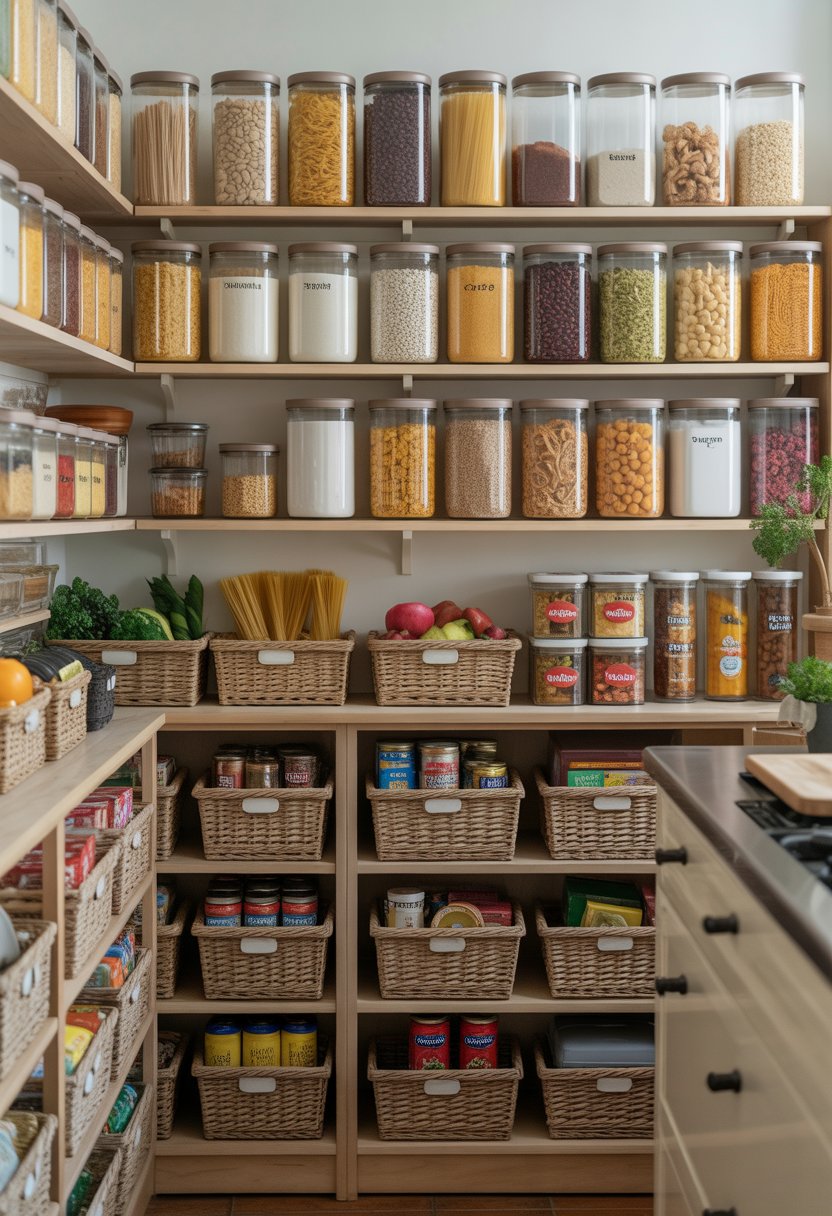


To keep your pantry neat and easy to use, focus on smart storage choices, tools that save space, and clear labeling. These steps help you quickly find what you need and keep everything fresh longer.
Choose the Right Food Storage Containers
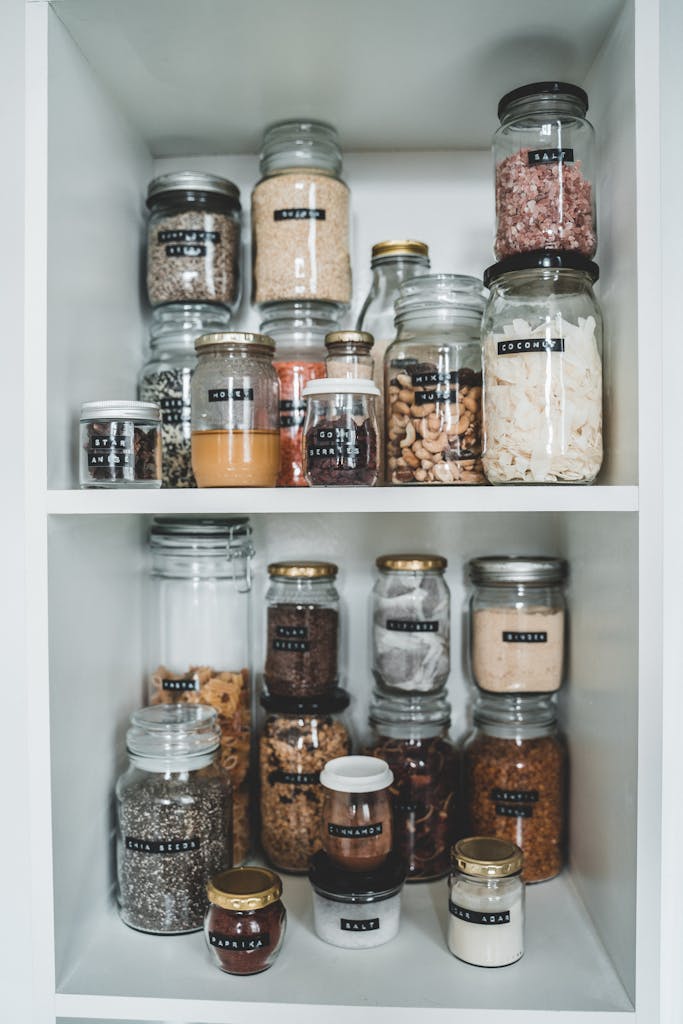
Use airtight containers to keep snacks, grains, and dry goods fresh. Clear containers are best because you can see what’s inside at a glance. Look for stackable containers to save space and avoid clutter.
Canisters work well for items like flour and sugar. For bags of chips or snacks, try a bag dispenser to keep things tidy and easy to grab. Using uniform containers helps your pantry look clean and makes stacking easier.
Avoid using original packaging if it’s bulky or not resealable. Transferring food to labeled containers helps prevent spills and keeps your food fresh.


Maximize Space with Pantry Organization Tools
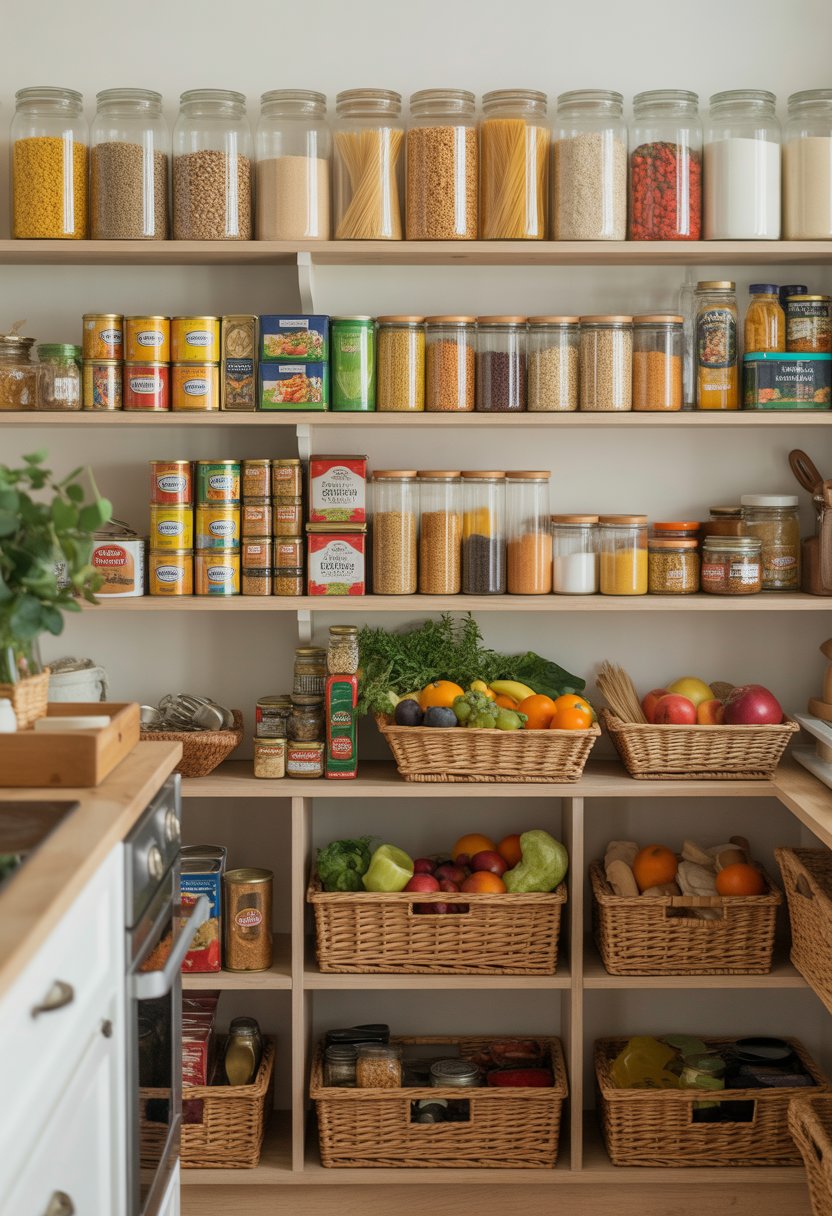
Use shelf liners to protect surfaces and make cleaning easier. They also stop items from sliding around. Add a lazy Susan for spices or small jars, this way you can spin it around and reach everything without digging.


Over-the-door racks add storage if your pantry door is free. Clear bins help corral smaller items like snacks or baking supplies so you can pull out what you need without making a mess.


Stackable shelves or risers double storage space by creating levels inside your pantry. Use baskets or bins to group similar items together, which keeps everything tidy and accessible.
Labeling and Keeping an Organized Pantry
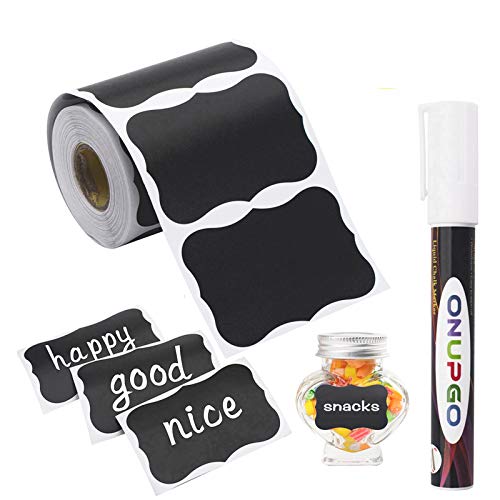
Label makers or chalkboard labels let you mark containers and bins clearly. When everything has a name, you won’t have to guess what’s inside or where things should go.
Group foods by type, snacks in one area, baking supplies in another. Keep frequently used items at eye level or in easy reach.
Check your pantry regularly to toss expired items and refill containers. This little habit keeps your system working and saves time during cooking.