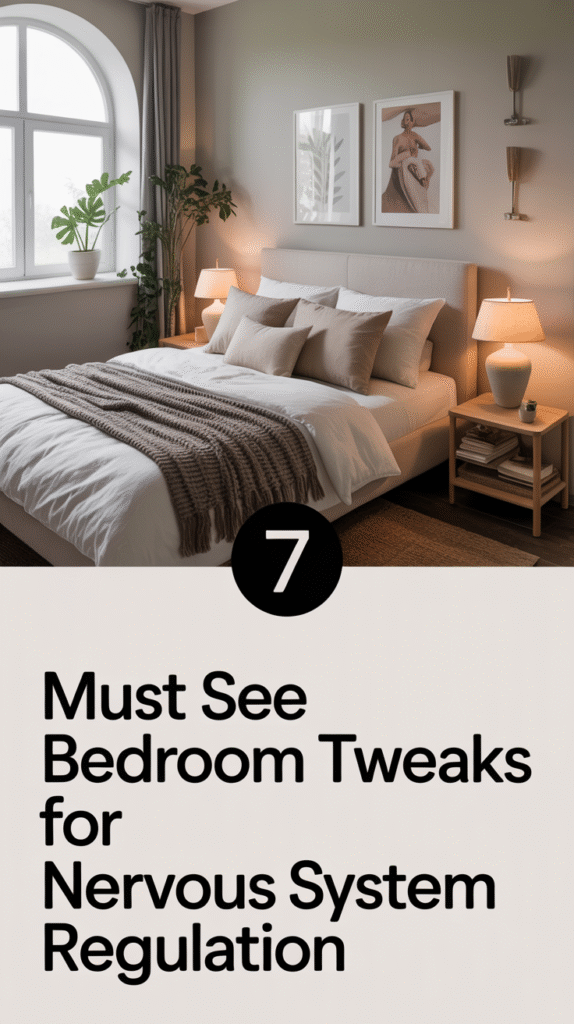
7 Bedroom Tweaks for Nervous System Regulation That Will Change Everything
Your bedroom is more than just a place to sleep. It’s the control center where your nervous system either finally powers down… or stays stuck in overdrive.
This post may contain affiliate links, which means I’ll receive a commission if you purchase through my link, at no extra cost to you. Please read full disclosure here.
If you struggle with anxiety, restless nights, racing thoughts, or waking up exhausted, your space might be working against you. The good news? A few intentional changes can turn your bedroom into a powerful tool for nervous system regulation, helping you feel calmer, safer, and truly restored.
Let’s walk through simple, science-backed design shifts that can transform your bedroom into a sanctuary for your body and brain.
Why Your Nervous System Cares What Your Bedroom Looks Like
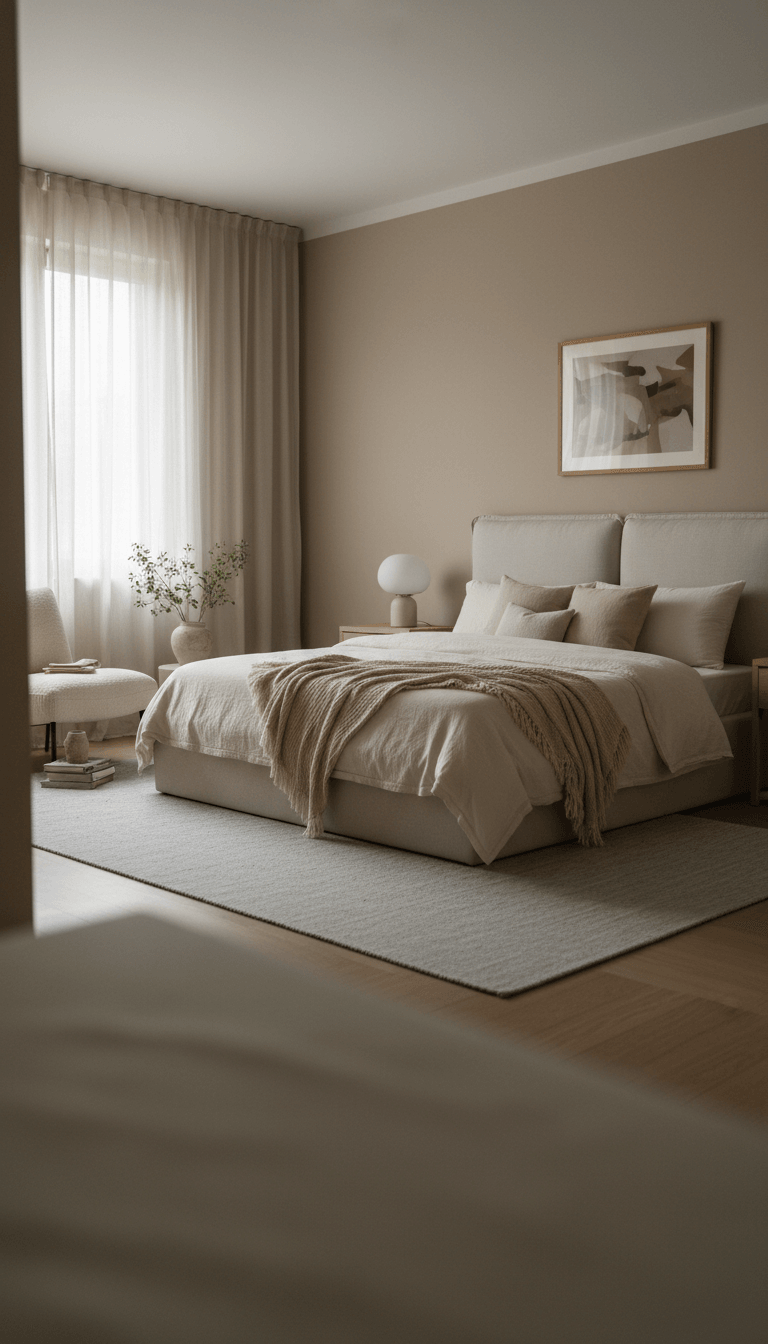
Before you buy new pillows or paint the walls, it helps to understand why your nervous system reacts to your space.
Your brain is constantly scanning your environment for signs of safety or threat. Clutter, harsh lighting, loud noises, and even certain colors can signal “be alert,” keeping your sympathetic nervous system (fight-or-flight) activated when it should be winding down.
If you want more inspiration for bedroom decor to create a calm environment here are some other posts:
How to Create a Peaceful Place in Your Bedroom for Somatic Healing That Feels Like a True Escape
The Ultimate Guide to Creating a Somatic Healing Environment That Will Instantly Soothe Your Nervous System
On the other hand, cues of safety and predictability support your parasympathetic nervous system (rest-and-digest). These cues tell your body, “You’re safe. You can relax. You can sleep.”
To support nervous system regulation, your bedroom should:
- Feel visually calm, not chaotic
- Be predictable and familiar, not constantly changing
- Limit sensory overload (light, noise, smell, texture)
- Encourage routines that tell your brain it’s time to rest
Action tip: Stand in your bedroom doorway and notice your first body reaction. Do you feel tense, overwhelmed, or soothed? Use that gut feeling as your starting point for change.
Create a Calm Visual Field: Colors, Clutter, and Layout
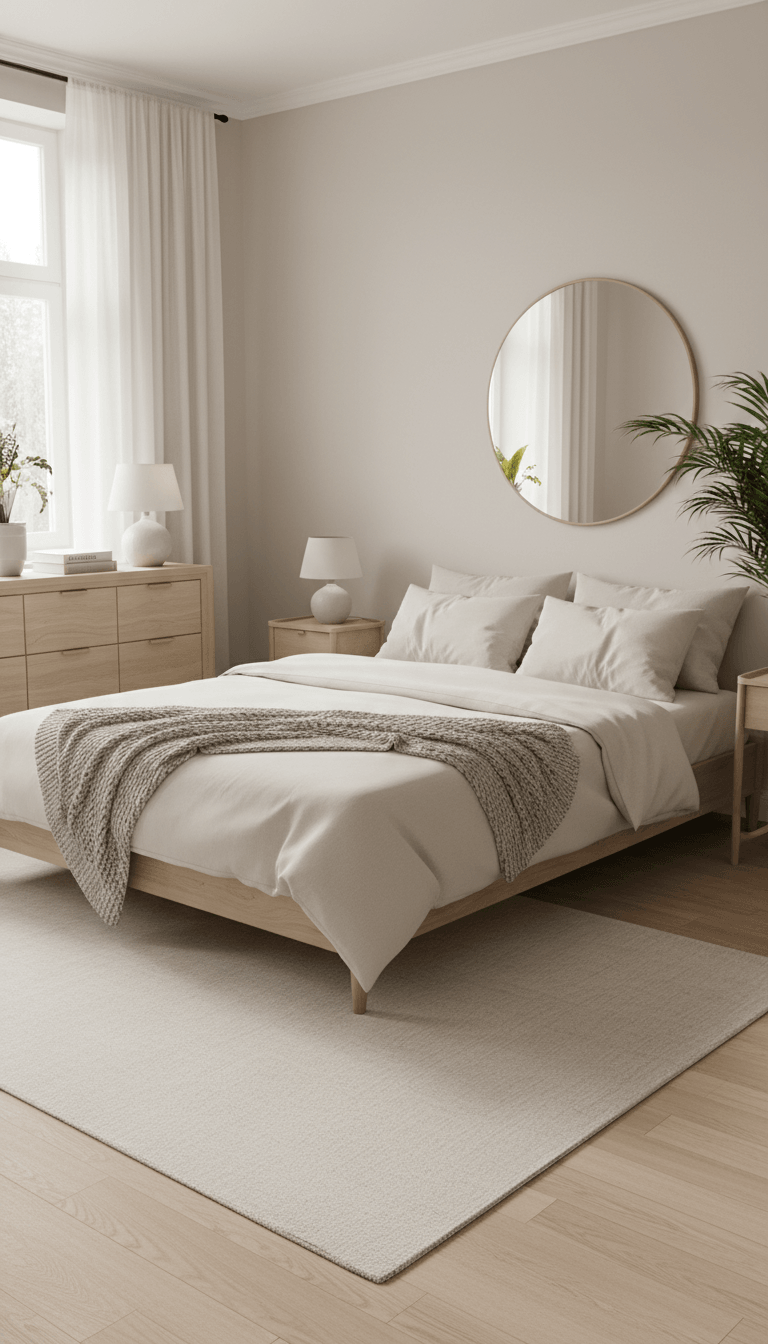
Visual noise is one of the biggest hidden stressors in a bedroom. Your eyes send nonstop information to your brain, and clutter forces your nervous system to process more than it needs to.
Start with color and visual simplicity:
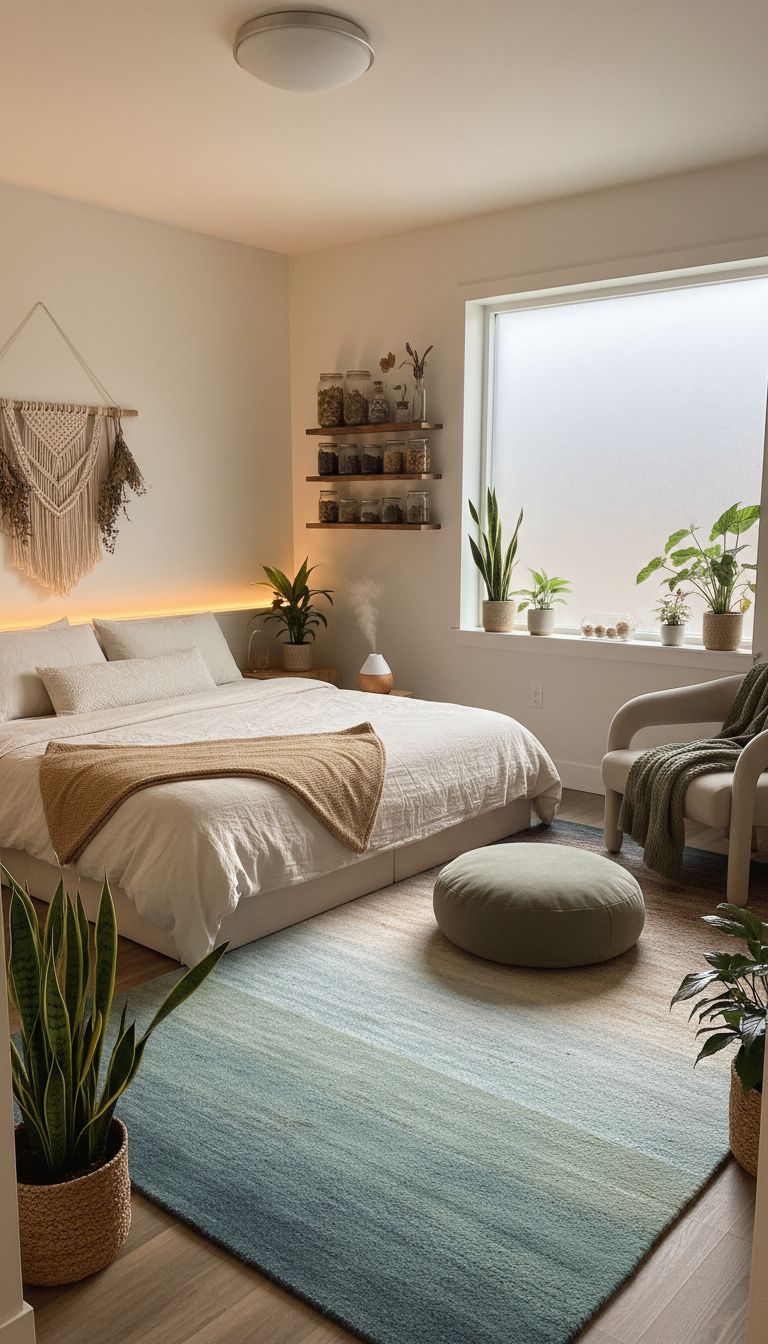
- Choose soft, desaturated colors like warm whites, taupes, sage greens, dusty blues, or gentle greys
- Avoid overly bright, neon, or high-contrast color schemes on large surfaces
- Keep patterns subtle and limited to one or two areas (like throw pillows or a rug)
Next, tackle clutter and furniture layout:
- Clear surfaces like nightstands and dressers, keeping only a few intentional items
- Use closed storage (drawers, baskets, boxes) to hide visual chaos
- Leave room to move easily around the bed so your body feels unconstrained
- Keep work-related items (laptops, paperwork, office supplies) out of sight—or out of the room
Another key factor is what you see from your bed. If your last view before sleep is piles of laundry or your work bag, your nervous system stays subtly on alert.
Action tip: Choose one “visual reset zone” in your bedroom—like the area directly opposite your bed—and make it the calmest, emptiest, most soothing view in the room.
Light, Sound, and Temperature: Sensory Magic for a Calm Body
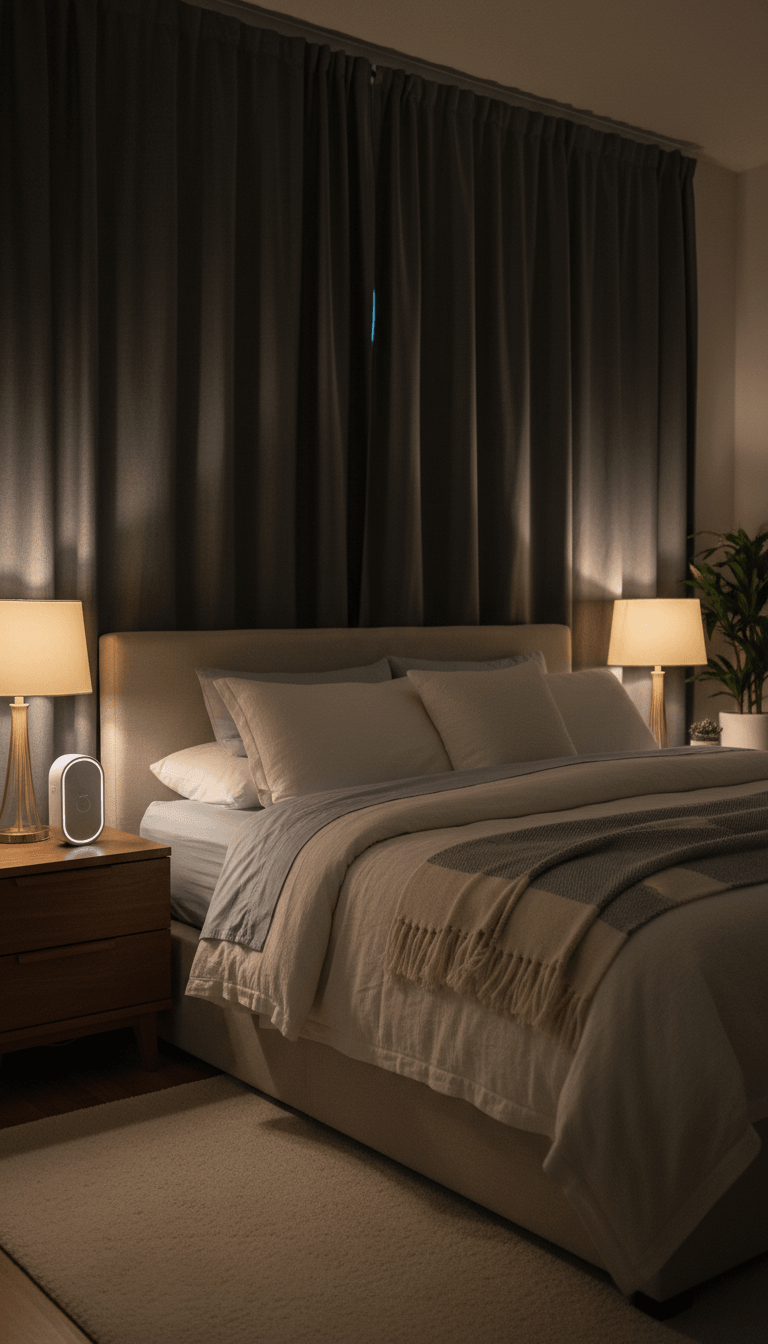
Your senses are directly wired to your nervous system. The wrong light, sound, or temperature can keep your body in low-grade stress mode all night.
Start with lighting:
- Use warm, low-temperature bulbs (around 2700K) instead of harsh blue-white light
- Add bedside lamps or wall sconces so you’re not relying on one bright overhead
- Use dimmers or low-level lights for evenings to signal wind-down time
- Block outside light with blackout curtains or a sleep mask if streetlights or early sun wake you
Then, consider sound:
- Use a white noise machine, fan, or soft sound app to mask sudden noises
- Seal gaps in windows or doors with weatherstripping to reduce outside sounds
- Avoid falling asleep to intense TV shows or news, which can keep your nervous system wired
And don’t forget temperature—the body sleeps best when slightly cool:
- Aim for a bedroom temperature between roughly 60–67°F (15–19°C), if possible
- Use breathable, natural fabrics for bedding like cotton, linen, or bamboo
- Layer blankets so you can easily adjust warmth without waking fully
Action tip: Create a 30-minute “sensory wind-down” routine each night—dim the lights, switch on white noise, adjust the temperature, and let your body register these cues as a nightly signal to relax.
Bed, Textures, and Touch: Turn Your Bed Into a Safe Haven
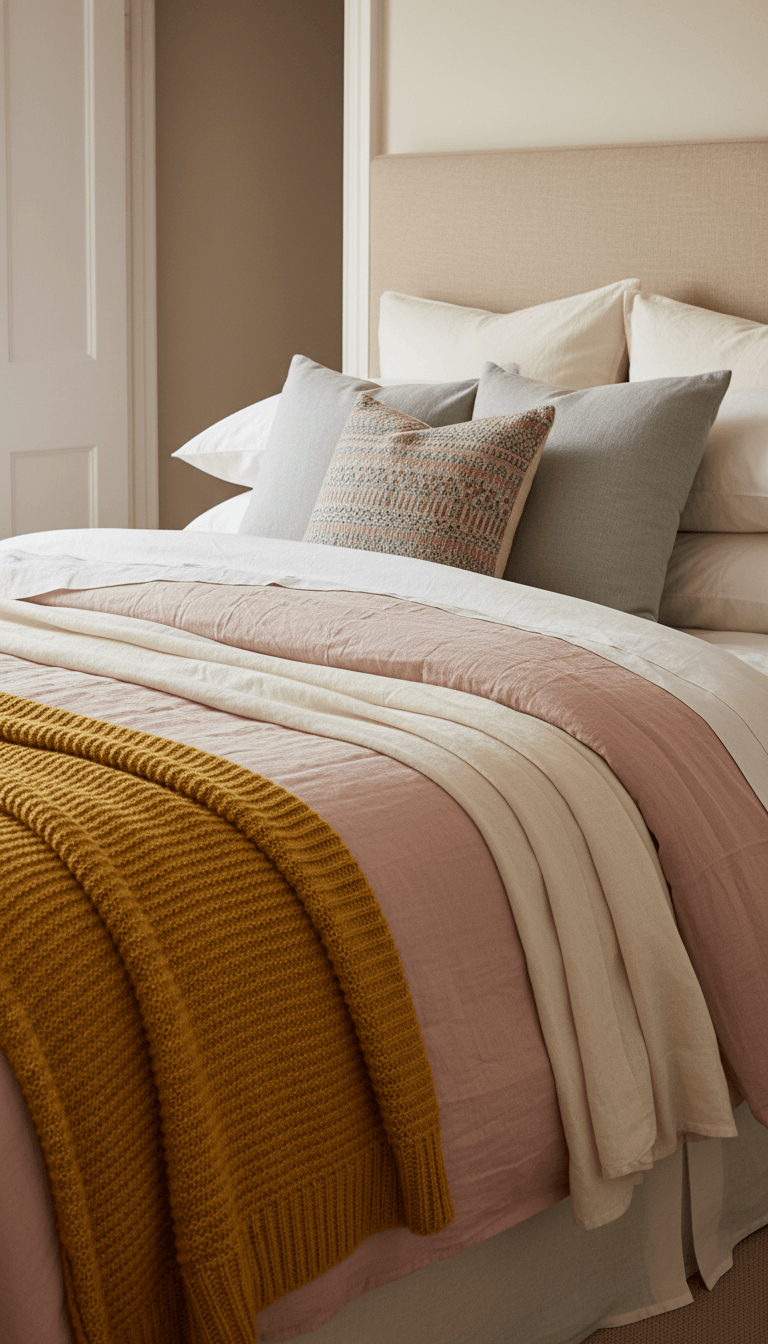
Your nervous system is highly responsive to touch. The textures and feel of your bed can either soothe you or subtly irritate you all night.
Focus on comfort and support first:
- Choose a mattress that supports your spine without creating pressure points
- Replace worn-out pillows that cause neck strain or constant adjusting
- Use bedding that feels good on your skin, smooth, soft, and breathable
Then, layer in calming textures:
- Add a soft throw blanket or quilt that feels comforting and substantial
- Use pillows with different but pleasant textures (smooth, lightly nubby, or velvety)
- Avoid scratchy fabrics or overly decorative pillows you constantly move or fight with
Feeling physically secure in bed also matters for nervous system regulation. Your body needs to feel held, grounded, and safe.
- Consider a slightly heavier blanket (or a properly weighted blanket) if you find deep pressure calming
- Position your bed so you can see the door without being directly in line with it—this can subconsciously create a sense of safety
- Keep the floor area around your bed clear to avoid feeling cramped or trapped
Action tip: Spend two minutes lying on your made bed during the day and notice every point of physical discomfort or irritation. Adjust one thing (pillow, blanket, sheet texture) at a time until your body feels truly at ease.
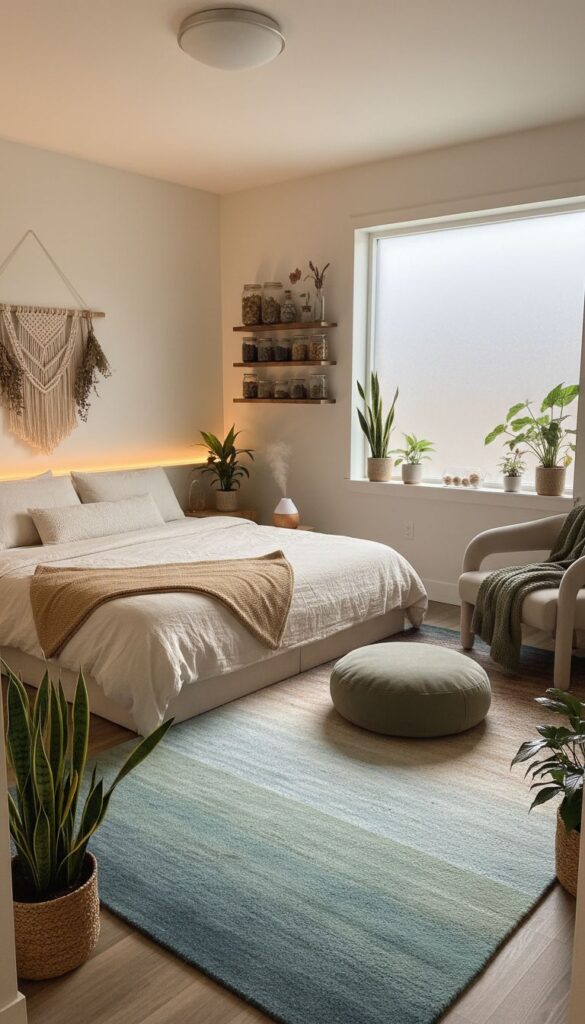
Rituals, Boundaries, and Personal Cues of Safety
Even the most beautiful bedroom can’t regulate your nervous system if your habits keep you in stress mode. Your routines and boundaries are just as important as your paint color.
First, protect your bedroom’s purpose:
- Use your bedroom mainly for sleep, rest, and intimacy—not for work, email, or arguments
- Keep a charging station outside the bedroom if possible, or at least across the room
- Avoid scrolling in bed; the blue light, content, and posture all signal wakefulness, not rest
Next, create evening rituals that cue your nervous system to slow down:
- Dim the lights and close the curtains at the same time each night
- Keep a simple wind-down ritual: light stretching, gentle reading, journaling, or slow breathing
- Place soothing objects on your nightstand: a favorite book, a soft lamp, a small plant, or a comforting photo
Include personal cues of safety and joy:
- Add 1–3 deeply meaningful items: a framed picture, artwork you love, or a symbol of calm
- Avoid overloading the room with decor; prioritize what makes your body exhale, not what just looks trendy
- If you share the space, agree on “no-conflict hours” in the bedroom so it remains emotionally safe
Action tip: Design a 10-minute pre-sleep ritual you can do in your bedroom every night. Repeat it consistently for two weeks and notice how your body starts to relax more quickly over time.

Conclusion
Your bedroom can be one of the most powerful tools you have for nervous system regulation, but only if it actively supports calm instead of chaos. By simplifying visual distractions, softening light and sound, choosing soothing textures, and building consistent restful rituals, you send your body a clear message: you are safe here.
You don’t need a full renovation to feel the difference. Start with one small change, a cleared nightstand, warmer lighting, a better evening routine, and build from there. Over time, these intentional choices can turn your bedroom into a true sanctuary, helping your nervous system reset each night so you can wake up clearer, steadier, and more resilient for the day ahead.