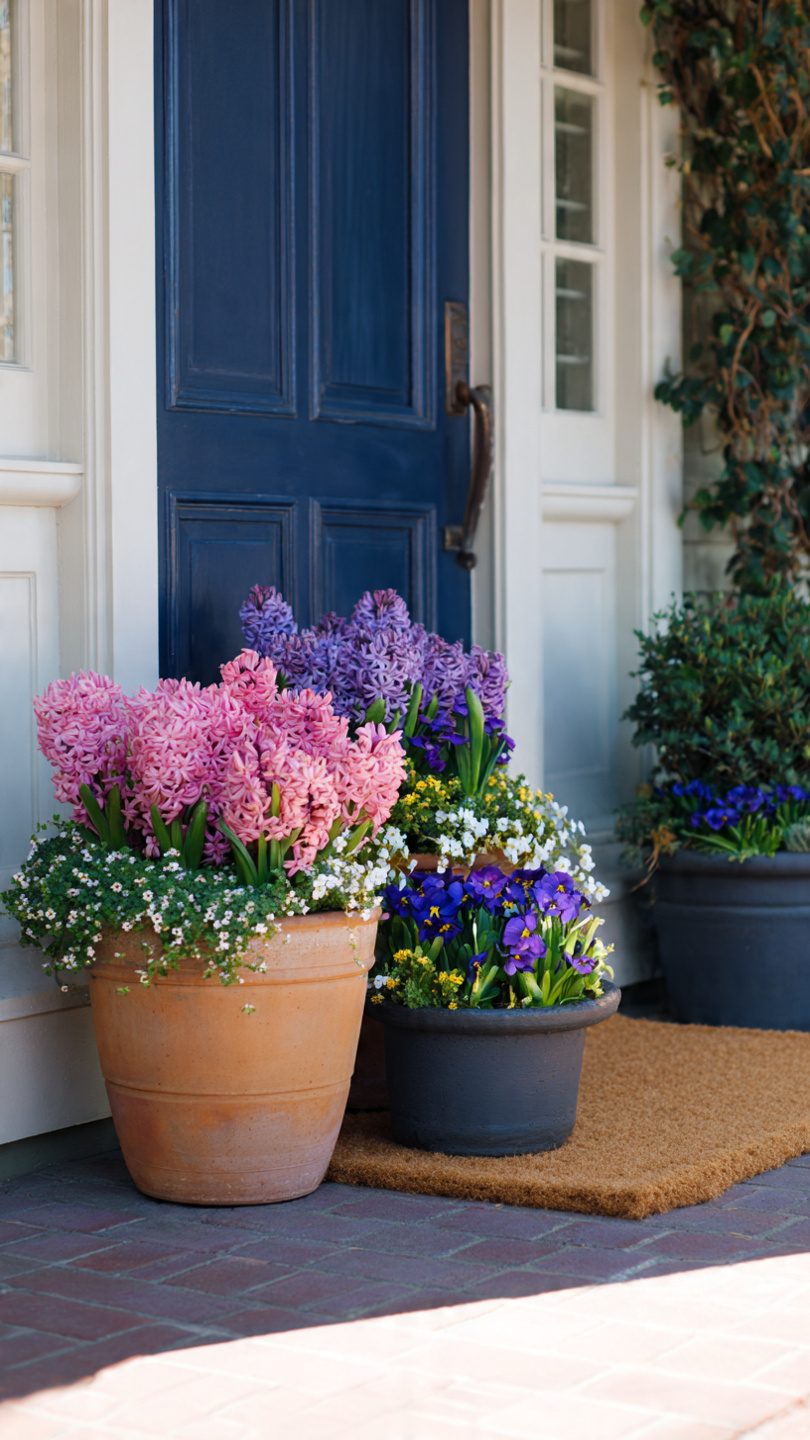
Front yard ideas for spring (simple and fresh)
Pick a few small changes that add color and shape. Repeat plants so it feels calm, not busy. Most of this works in one weekend and stays low-maintenance.
This post may contain affiliate links, which means I’ll receive a commission if you purchase through my link, at no extra cost to you. Please read full disclosure here.
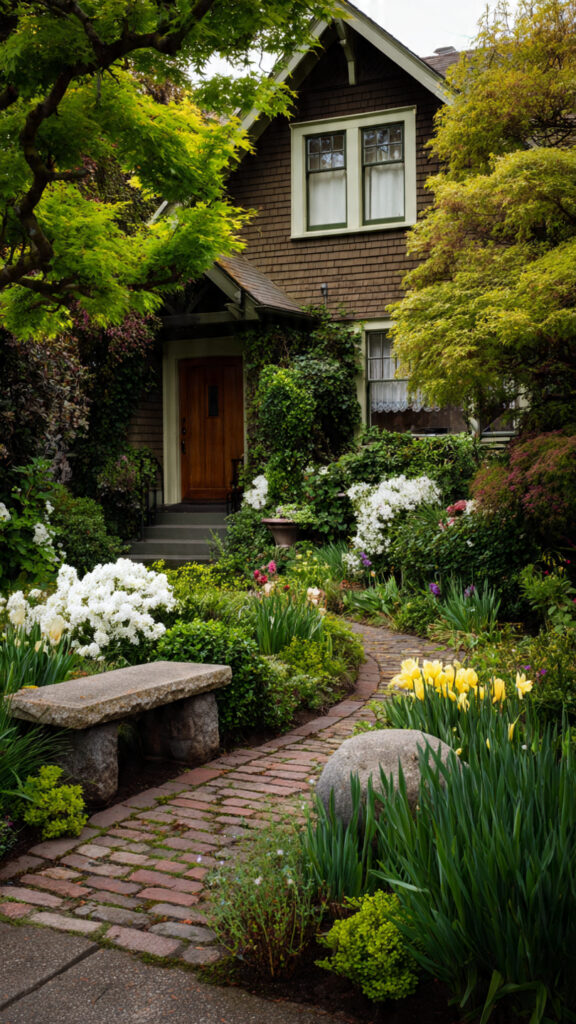
1. Frame the walkway with a narrow flower border
A shallow bed along your path or foundation instantly lifts curb appeal. Keep the depth modest (6–12 in.) so it’s easy to plant and maintain. Put low growers in front and taller spring blooms behind, and mirror the layout on both sides of the walk for a tidy, balanced look. Mix about 70% reliable perennials with 30% seasonal annuals so you can swap color each year.
- Front row: pansies, alyssum, or creeping thyme (stay under 12 in.).
- Back row: tulips, daffodils, hyacinths for spring pop.
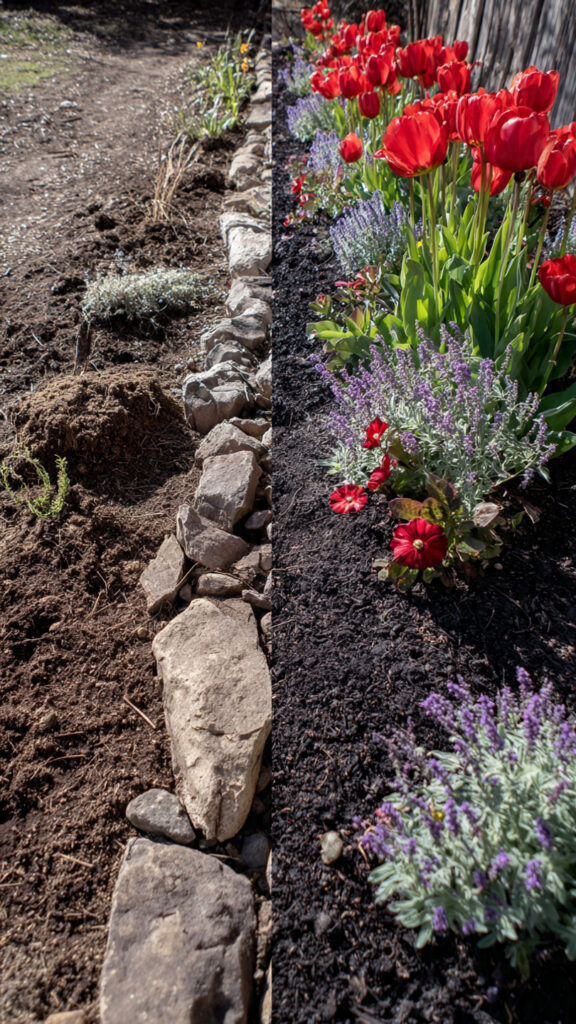
- Edge with mulch or small scalloped stones; keep a clean line where lawn meets bed.
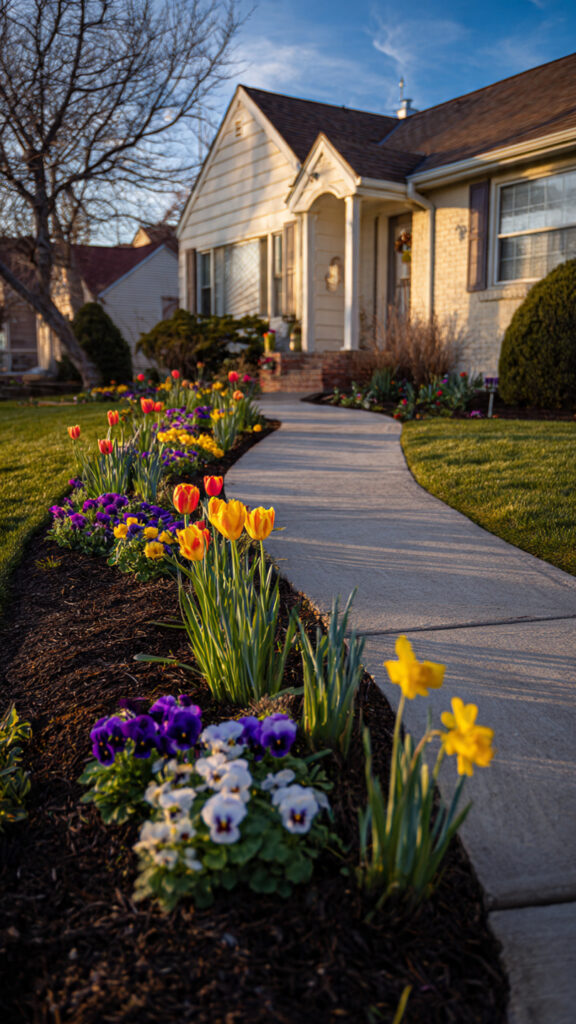
2. Add containers by the door for instant color
Two or three pots in different heights make the entry feel finished without digging up the yard. Containers let you chase the sun, move color where you need it, and change plants after bulbs fade. Choose fragrant spring classics for the main show and let a trailer soften the edges.
- Pots: mix terracotta with one matte charcoal planter for contrast.
- Fill: hyacinths (scent), primroses or violas (color), plus trailing ivy or sweet potato vine.
- Shade option: swap in impatiens or heucheras if your entry is dark.
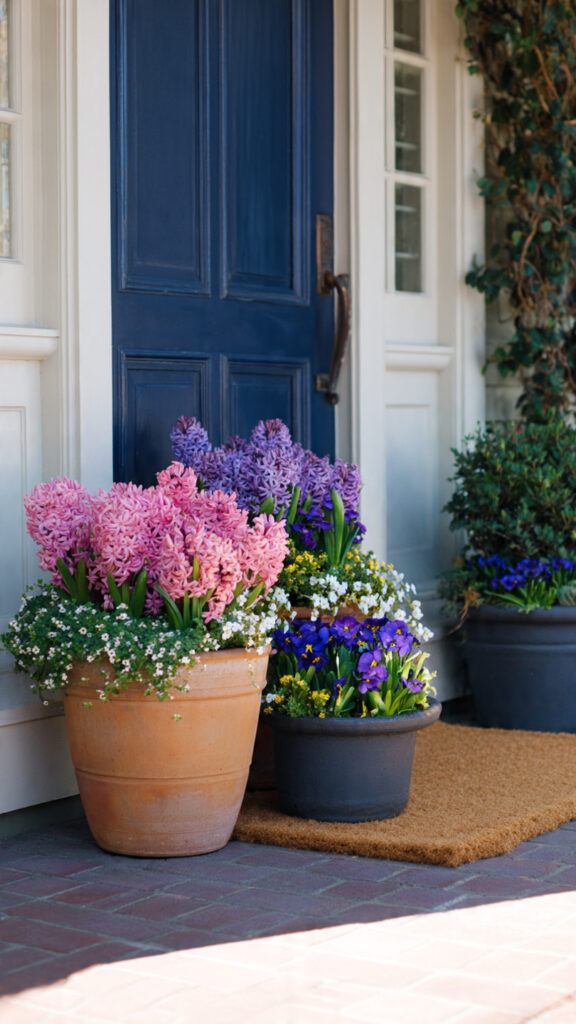
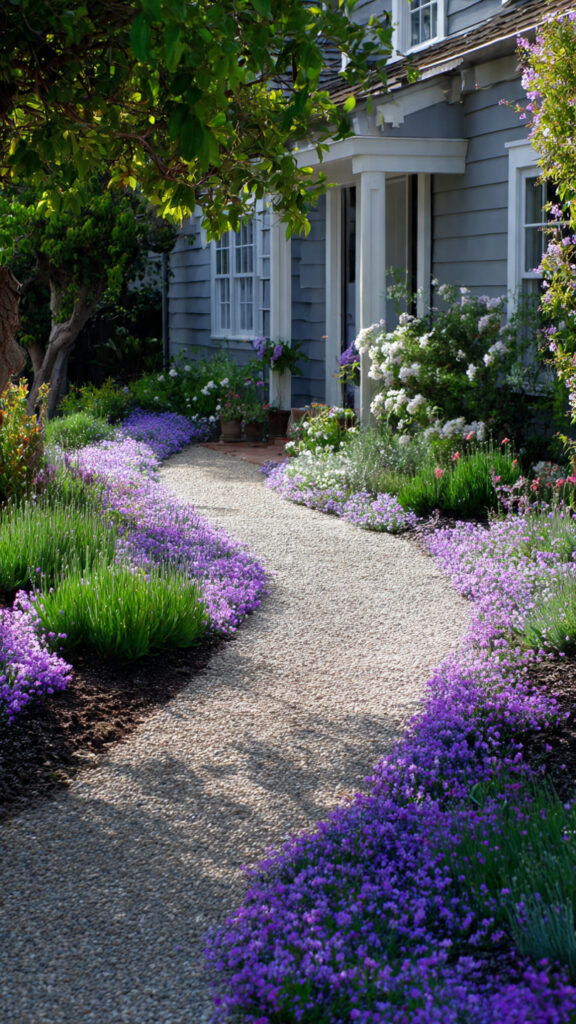
3. Define a path with gravel or stepping stones
A clear route guides the eye and visitors while protecting beds. Lay pea gravel over landscape fabric, or set irregular flagstones about 18 in. apart. Line the edges with low, tough spring bloomers for texture and a hint of scent, it looks intentional and cuts down on maintenance.
- Base: compacted gravel or spaced flagstones on fabric to block weeds.
- Edging plants: lavender, creeping phlox, or dwarf catmint.
- Keep the curve gentle; it feels more welcoming than a straight line.
4. Anchor with evergreens, then tuck in bulbs
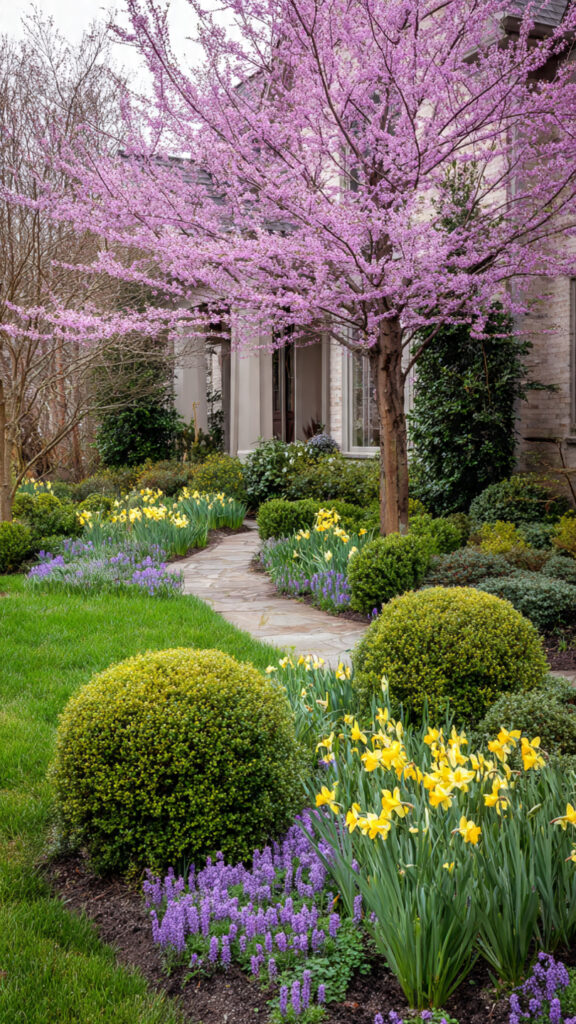
A couple of small evergreen shapes give structure year-round, so spring color has a backdrop. Plant bulbs around their bases for seasonal lift, and add one small flowering tree if you have the space, it gives height without a lot of mess.
- Evergreen anchors: boxwood balls, dwarf juniper, or inkberry holly.
- Bulbs at the base: daffodils (deer tend to skip them), hyacinths.
- Small tree (optional): redbud, dogwood, or cherry for pink/white spring blooms.
5. Refresh mulch and cut a clean edge
A fresh 2-in. layer of shredded bark or pine straw is the cheapest facelift: it makes colors pop, holds moisture, and ties everything together. Pull mulch back a few inches from stems and trunks, and carve a crisp edge where lawn meets bed.
- Mulch: natural shredded bark or pine straw, 2 in. deep.
- Edge: use a half-moon edger or flat spade for a clean line.
- Keep mulch off plant crowns to avoid rot.